
Great features aren’t enough: What shoppers want from Scan & Go
A long list of features can make a self-scanning solution look impressive on paper. But a feature only creates value when shoppers understand it, see a reason to use it, and can use it successfully. Let’s dive into the reasoning behind the creation of a successful Scan & Go feature!
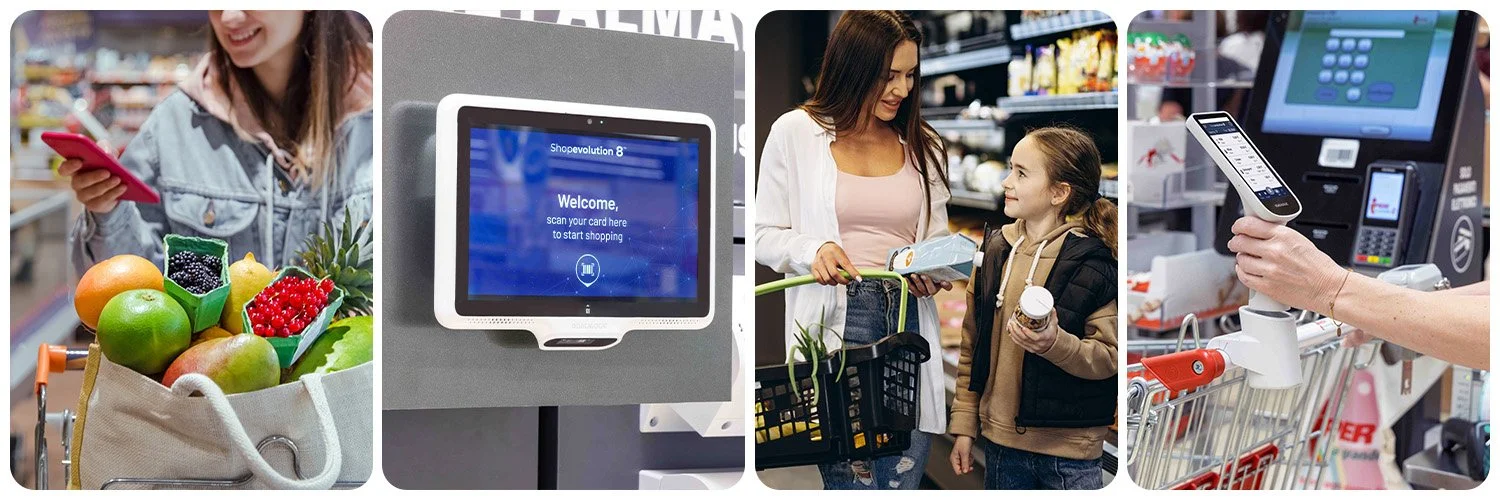
Self-scanning, also known as Scan & Go, is a retail technology that has grown significantly in popularity over the last decade. Today, it is used by retailers around the world, across stores of different sizes and formats. Shoppers have increasingly embraced this way of shopping, encouraging more retailers to introduce self-scanning as part of the in-store experience. Other self-service technologies, such as self-checkout, have followed a similar development, paving the way for an increasingly diverse range of retail solutions.
However, as the number of available solutions and features continues to grow, retailers face another question: What actually makes a great Scan & Go experience in the eyes of the shopper? Is it the number of features available, the hardware used for scanning, the ease of the shopping journey, or how the solution is introduced and promoted to customers?
The perception of self-scanning features
A recent study examining how shoppers understand, anticipate, and actually use Scan & Go apps offers an interesting perspective on this question. Rather than focusing solely on which features a solution provides, the research considers how shoppers perceive those possibilities and whether they are ultimately able to benefit from them.
The findings can be divided into three concepts: perceived affordance, imagined affordance, and actualised affordance. In this context, affordance refers to what the technology allows (or appears to allow) a shopper to do. Put more simply, these concepts raise three important questions:
Do shoppers understand what a feature can do?
Do they see a reason to use it?
And can they actually use it successfully?
Perceived affordance: Do shoppers understand what a feature can do?
A feature can be useful without customers ever discovering its value. If shoppers do not understand that they can locate a product, create a shopping list, see their running total, or access personalized offers, the functionality itself will have limited impact.
This can be particularly relevant in markets where self-scanning is still relatively new. Shoppers may be uncertain about which features are available, how to use them, and what benefits they provide. To encourage adoption, retailers need to make these possibilities easy to discover and understand. Clear communication and marketing, combined with intuitive design and readily available staff assistance, can help shoppers become familiar with the solution and understand the value it offers.
Imagined affordance: Do shoppers see a reason to use a feature?
The benefits of using a specific feature – or a Scan & Go solution in general – need to outweigh the perceived effort required to start using it. This means retailers need to understand their shoppers' pain points, needs, and motivations. Instead of asking, “What else can we add to our Scan & Go solution?”, a better question would be, “What would make the shopping journey better for our customers?”
Some customer needs are relatively easy to identify. Saving money, keeping track of spending, finding products, and accessing product information are all examples of functionality that can provide clear value during the shopping journey. Other needs may be more difficult to identify and require retailers to better understand how their customers shop and what challenges they encounter along the way.
Ultimately, adding more functionality does not automatically create more customer value. A smaller number of relevant and well-designed features may be far more valuable than a long list of functions that shoppers have little reason to use.
Actualised affordance: Can a feature be used successfully?
Understanding what a feature does and seeing a reason to use it are important steps towards a successful Scan & Go experience. However, the crucial final step is whether the shopper can actually use the feature successfully.
By this point, the shopper already has an expectation of what the feature will do and how it will improve their shopping journey. If the experience fails to meet that expectation, even relatively small points of friction can quickly lead to frustration. Slow hardware, unreliable software, confusing interactions, or unnecessary steps can all negatively affect the overall Scan & Go experience.
And it does not necessarily take a major technical failure to change a shopper's perception of a feature. A product-finding function that is not accurate enough, personalized offers that are not relevant, or a shopping list that requires too many steps to manage can all reduce the value of the solution. For a feature to truly succeed, it needs to do more than simply exist – it needs to work reliably, intuitively, and in a way that delivers on the value the shopper expected from it.
What does this mean for retailers and self-scanning providers?
One of the key takeaways is that a Scan & Go solution should not be evaluated solely on its feature list. Retailers and solution providers also need to consider whether those features make sense to shoppers, address actual needs within the shopping journey, and work well enough for customers to see a reason to keep using them.
Maintaining a close connection with shoppers is therefore an important part of developing a successful Scan & Go experience. Customer insights can help determine which feature should come next – or even whether a particular market or customer group is ready for self-scanning in the first place. Surveys, feedback from store staff, usage data, and social listening can all provide valuable insights into what shoppers want, where they encounter friction, and what could improve their experience.
Ultimately, a successful Scan & Go solution is not necessarily the one with the most features. It is the one where shoppers understand the features, see their value, and can use them successfully. By keeping these three elements in mind, retailers and solution providers can focus their efforts on functionality that creates genuine value – for both the shopper and the business.