
Retail shrinkage
Shrinkage remains one of the most talked-about challenges in retail — and for good reason. Every year, it leads to significant losses in both inventory and revenue.
In simple terms, shrinkage refers to inventory loss caused by factors other than sales. But behind that simple definition lies a complex reality: a wide range of causes that can be difficult to track, yet highly valuable to understand and address.
Shrinkage can also be a barrier for retailers looking to implement self-service solutions such as self-scanning, as they may fear it will increase when shoppers become more independent during their visit. However, with a solid understanding of the different causes of shrinkage — and the right solutions to address them — self-service does not have to negatively impact shrinkage. In fact, it can be a smart and seamless way for retailers to gain deeper insights into consumer behaviour and detect suspicious activity more efficiently.
Dive into retail shrinkage and self-service here!


Understanding shrinkage: intentional vs. accidental factors
It is important to remember that not all shrinkage is intentional.
In fact, a significant share of shrinkage linked to self-service solutions happens by mistake. Most shoppers aim to do the right thing, but unclear instructions, limited knowledge, or imperfect technology can create friction along the way. That’s why it’s essential to distinguish between intentional and accidental shrinkage.
Intentional shrinkage occurs when actions are deliberate — for example, shoplifting, skip-scanning, or barcode switching to pay less than required. These behaviours can originate from both internal and external sources.
Accidental shrinkage, on the other hand, happens without intent. Even so, it can lead to substantial losses if left unaddressed. Like intentional shrinkage, it may stem from internal factors, such as inventory inaccuracies, as well as external factors, such as customers unintentionally misusing self-service solutions.
Internal and external shrinkage
Shrinkage can arise from a variety of causes and may originate from both internal and external sources. Because these differ, each type of shrinkage requires its own approach to be effectively managed.
This is internal shrinkage
Internal shrinkage originates from within the retail operation itself. It can be caused by factors such as employee theft, administrative errors, or process inefficiencies.
While often less visible than external threats, internal shrinkage can have a significant impact on both revenue and inventory levels.
By improving internal processes, increasing transparency, and using the right technology, retailers can reduce these risks and maintain better control.

This is external shrinkage
External shrinkage is caused by factors outside the retailer’s direct control, most commonly linked to customer behaviour. This includes shoplifting, organized retail crime, and misuse of self-service solutions, such as skip-scanning or incorrect item entry.
As retail environments evolve, so do the methods used to exploit them. Understanding these risks — and implementing effective solutions to detect and prevent them — is key to protecting both revenue and the overall shopping experience.
Shrinkage and self-service
Does self-service solutions such as self-scanning automatically lead to higher shrinkage? No, but new retail solutions do change the nature of shrinkage and how it needs to be managed. As stores expand, new retail technologies can create confusion and uncertainty among shoppers — but also opportunities for shoplifters and organized crime groups. By staying up to date on the possible sources of shrinkage, retailers can ensure that their retail solutions add value, while keeping shrinkage low. Here are some of the most talked-about shrinkage causes, in connection to self-service:
Register the wrong product:

Incorrect item entry
Incorrect item entry, or product misidentification, in self-service occurs when the wrong item is registered in the system.
Scanning the incorrect barcode:

Beware of barcode switching
Barcode switching, sometimes called tag swapping, means scanning a less expensive item instead of the actual one.
Failing to scan every item:

This is skip-scanning
Skip-scanning means when a shopper uses a self-service or self-scanning solution, but fails to scan or register all items in the basket.
How can shrinkage be prevented?
Shrinkage and loss prevention are constant challenges in retail — but they can be managed. Reducing shrinkage in self-scanning environments requires a combination of technology, store operations, and customer experience. Here are some of the most effective ways to reduce shrinkage in self-service environments:

Staff presence and training
Well-trained staff members are one of the most effective deterrents against shrinkage: Having employees available near self-service areas helps customers when needed, and discourages dishonest behaviour. Staff can also identify and respond to suspicious activity, in real time.
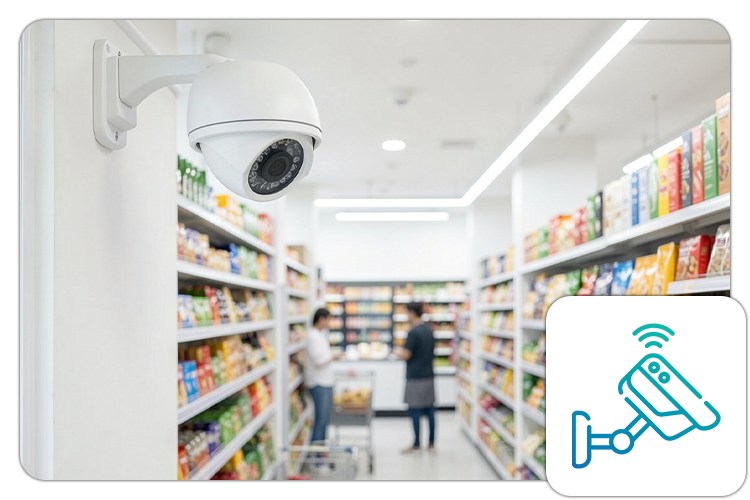
Surveillance and validation systems
Use a combination of technologies such as cameras, AI, and algorithm-based monitoring to detect unusual behaviour. When systems can work together: for example, combining visual verification with transaction data, retailers gain a better overview and can act quickly when something seems off.
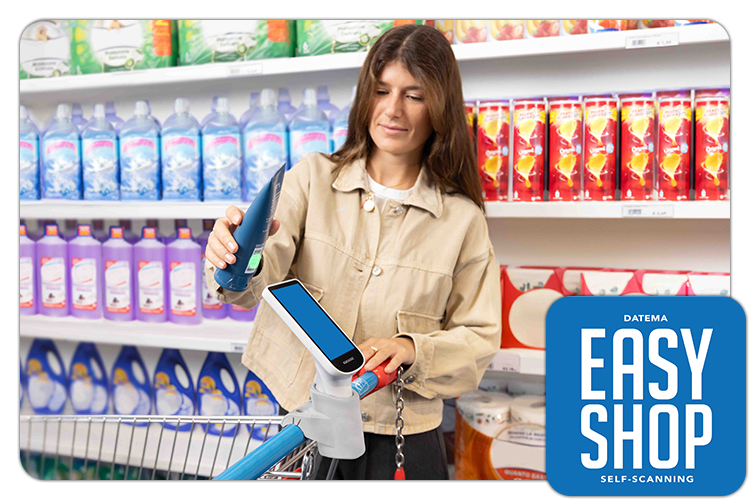
Reliable software and hardware
Stable, well-integrated solutions are key to reducing errors. Intuitive self-scanning software like EasyShop, combined with reliable devices such as the Joya Smart, ensures accurate item registration and a smoother user experience — reducing both accidental and intentional mistakes.

Clear user guidance and interface
Many errors are unintentional. Providing clear instructions, intuitive navigation, and well-structured product categories helps customers scan and register items correctly, reducing the risk of incorrect item entry.

Multiple control mechanisms
Layered security is highly effective. Combining barcode scanning with weight verification (scales), camera validation, and product recognition creates multiple checkpoints that reduce both fraud and mistakes.

Data-driven monitoring and continuous improvements
Use transaction data and behavioural analytics to identify patterns, risks, and weak points. By continuously refining rules, alerts, and processes, retailers can proactively reduce shrinkage over time.

Want to learn how to implement self-scanning — without increasing retail shrink?