Retail insight: The power of personalization
Personalized shopping is no longer about going the extra mile—it has become a fundamental way for retailers to stand out in an increasingly promotion-driven landscape. When done right, personalization not only boosts sales but also strengthens customer loyalty and increases store preference.
With improved data capture capabilities and smarter ways to activate customer data, retailers now have greater opportunities than ever to deliver relevant, personalized experiences. By doing so, they can turn everyday shopping trips into meaningful interactions—and transform occasional shoppers into loyal customers.
The possibilities with retail data capture
While data capture is not a new concept, its importance has grown significantly over the past decade, and the ability to collect and utilize data is greater than ever before. For retailers, this presents numerous opportunities to enhance the retail experience—particularly for frequent shoppers. One of these opportunities includes personalized messages, offerings and suggestions.
With multiple touchpoints throughout the shopping journey, both online and in physical stores, retailers can gain deeper insights into customer behaviour and preferences, as well as identify patterns and pain points. Most shoppers are also comfortable with their data being collected; in fact, only 8% do not want retailers to remember them or their past purchases.
But which shoppers benefit most from data-driven product suggestions and offers? Store members and customers who make recurring purchases typically gain the greatest value from personalized offerings based on detailed customer data. However, shoppers with similar demographics and behaviours can also benefit significantly. Even when information about “anonymous” shoppers is limited, factors such as purchased items, basket size, and time of purchase can help retailers determine which offers and recommendations are most likely to resonate with each shopper.
Push vs pull strategy in retail
The push vs pull strategy is a well-known concept in sales and marketing. Push strategies focus on directly “pushing” products to customers through proactive and often aggressive marketing tactics, while pull strategies aim to “pull” customers in by creating demand for a product or service.
Over time, there has been a clear shift from purely push-based approaches toward more pull-focused efforts. As consumers are exposed to an overwhelming number of advertisements in their daily lives, creating an organic desire for a product or service has become a more effective way to generate purchase intent. This shift is highly relevant in a retail context as well.
Personalization is a powerful way to establish and nurture an organic relationship with shoppers. By capturing and analyzing data, retailers can gain valuable insights into individual preferences, such as product categories, brands, and purchasing behavior. By recommending highly relevant products, retailers can position themselves more as trusted advisors rather than traditional salespeople.
This does not mean that retailers should stop promoting products through offers, discounts, or campaigns. However, customers are far more likely to respond positively and make a purchase when those promotions are personalized and aligned with their individual preferences.
Younger shoppers want personalized shopping
The potential of personalized shopping is significant and expected to grow even further in the future. According to a recent study, nearly three-quarters of respondents stated that they were more likely to make a purchase when receiving a personalized offer or recommendation. Furthermore, the study found that zero respondents under the age of 40 were less likely to purchase a product after receiving a personalized message.
Another interesting insight was that respondents belonging to the Millennial generation were the most likely to show increased loyalty toward retailers that demonstrated an understanding of their shoppers and their preferences.
So why does this differ across generations? One possible explanation is that younger consumers have grown up using digital tools and are therefore more accustomed to their data being collected and utilized. As digital natives, they are more likely to recognize the value of personalized content and tailored product offerings compared to some older generations.
Personalization in real-time
Can retailers influence purchase decisions while shoppers are visiting the store? The answer is yes—and it’s something many shoppers now expect. A recent study shows that the majority of U.S. shoppers believe retailers should personalize the shopping experience in real time, rather than days after the visit.
Delivering personalized experiences in real time is an effective way to boost sales, while taking a more refined approach than traditional promotional tactics. Many stores still rely on physical in-store coupons placed next to products to encourage additional purchases. While this type of promotion can be effective, it offers no personalized value. Any shopper who happens to be interested in the product can use the coupon, which typically represents a small segment of the overall customer base.
Instead, presenting new products that a shopper is likely to be interested in—based on purchase history and expressed preferences—can be a far more effective approach. This allows retailers to deliver relevant, personalized content without relying on overt or intrusive sales tactics.
Personalize the shopping trip with self-scanning
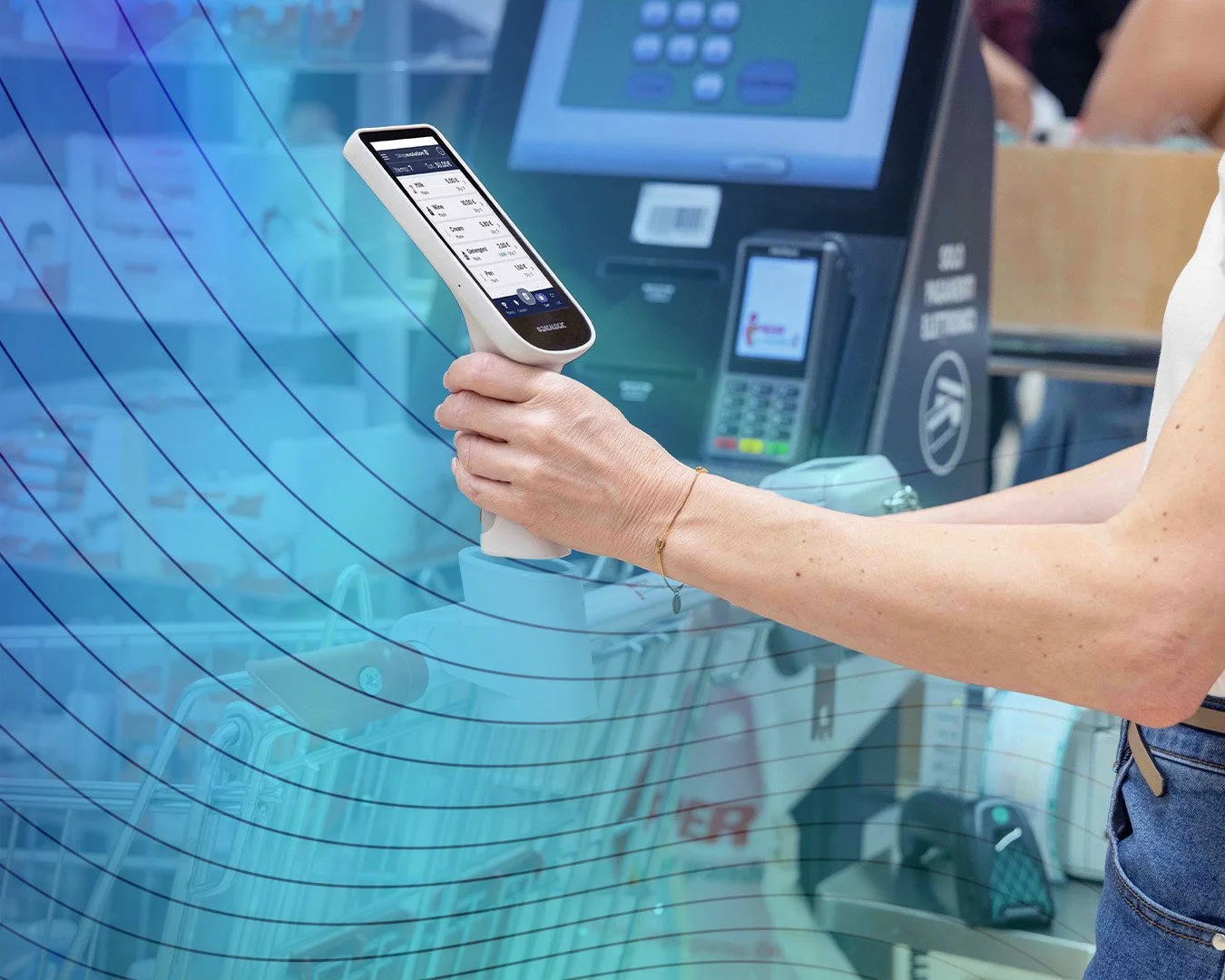
One of the most effective ways to deliver personalized messages, offers, and product suggestions is through self-scanning. Self-scanning enables retailers to provide relevant recommendations in an organic and non-intrusive way throughout the shopping journey. There are several reasons why self-scanning is particularly well suited for personalization:
Personalized offerings based on customer data
By leveraging customer data, retailers can recognize shoppers as soon as they begin their in-store shopping trip. This makes it easier to promote relevant products and suggest suitable additions to the existing shopping basket.
Real-time personalization
Self-scanning allows shoppers to receive tailored suggestions and offers in real time, for example when entering a specific section of the store. By delivering relevant promotions throughout the shopping trip, retailers can continuously encourage purchase intent.
Omnichannel potential
Omnichannel retail remains a priority among retailers. When a self-scanning solution is integrated with other key systems, such as CRM infrastructure, data and functionality can be centralized. For instance, shoppers using the retailer’s app can self-scan items, view their membership status, and access personalized discounts—all in one place.
More retail insights