As AI takes on a growing role in the shopping journey, retailers face new opportunities and challenges. Explore five key dimensions of AI-powered shopping and how retailers can find the right balance between convenience, control, personalization, and consumer choice.

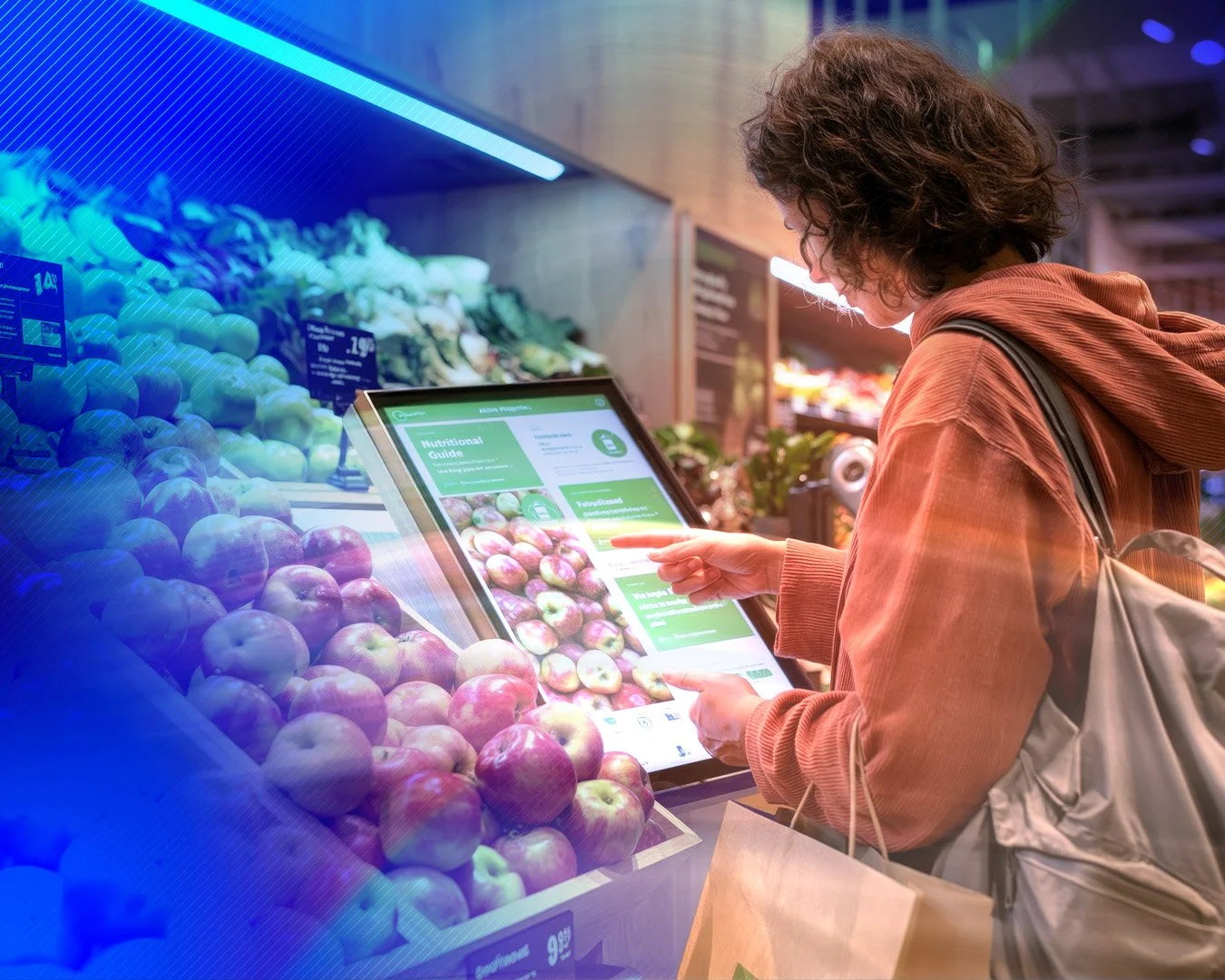
The future is already here, and retailers have begun introducing AI-powered features in their stores, ranging from AI-assisted self-scanning and smart scales to AI shopping assistants. Some retailers have even taken it a step further, offering fully AI-powered shopping experiences where an AI agent selects products, adds them to the basket, and completes the purchase on behalf of the shopper.
At first glance, this new way of shopping seems like a major convenience – and it certainly has the potential to be. However, it also raises important questions about the trade-off between convenience and control. While some shopping tasks may be considered tedious or time-consuming, they can also offer opportunities for inspiration and product discovery. This raises an interesting question: at what point does giving up control become a way of gaining freedom?
The five dimensions of AI-powered shopping provide a framework for exploring the factors that matter most to retailers and their customers when introducing AI-powered shopping technology.
The five dimensions of AI-powered shopping
Convenience vs. involvement
This dimension highlights the potential for consumers to save time and effort, but also the risk of losing their involvement in the shopping process. For some, the trade-off between simplicity and participation would be a natural step towards fully AI-powered shopping, while others may be reluctant to give up control over their shopping journey. As everyone has a unique view of their preferred shopping experience, the dimension of convenience vs. involvement is highly relevant for the implementation of any retail solution.
Efficiency vs. discovery
Getting the shopping done quickly and without unnecessary detours can be a great way to save time. However, too much efficiency can eliminate spontaneity and reduce opportunities to discover new products. This dimension raises an interesting question: when should shopping be quick and efficient, and when should it be a source of inspiration and an opportunity to discover new favourites?
Delegation vs. autonomy
This dimension explores the freedom gained by delegating routine decisions, compared with the potential loss of direct influence over individual choices. It is especially relevant for frequent, recurring shopping trips. Does the shopper want the same products every time, or do they enjoy trying something new occasionally? For retailers, the challenge is to understand where their shopping solutions should sit on the spectrum between delegation and autonomy, allowing consumers to decide how much control they want to retain.
Personalization vs. privacy
Every shopper has different preferences, and personalized offerings and discounts can be an effective way to provide relevant promotions without becoming intrusive or annoying. Previous purchases, product preferences, and other factors can enable a higher level of personalization, but this comes at a cost: access to more personal and household data, which not all shoppers may be comfortable sharing. This dimension highlights the trade-off between a highly personalized shopping experience and the amount of personal information consumers are willing to provide.
Optimization vs. independence
This final dimension focuses on the potential benefits of cost savings, better product matching, and more efficient purchasing, compared with an increased dependence on algorithms and their underlying priorities.
For shoppers, this trade-off might not be immediately obvious, but it becomes clearer in practice. What happens if the algorithm gets it wrong and recommends products that don't align with the shopper's preferences? Or if a retailer wants to promote a particular brand and adjusts the algorithm to prioritize those products over the shopper's usual choices?
As AI takes on more responsibility for purchasing decisions, the question becomes not only how well it can optimize the shopping experience, but also whose interests that optimization ultimately serves.
The future of AI-powered shopping is not necessarily about what AI can do – by now, we have already seen its possibilities across multiple areas. Rather, the future of AI-powered shopping should be about what shoppers actually want it to do. It is up to retailers to identify the tasks that add real value, while minimizing the tedious parts of the shopping journey that shoppers would rather avoid.
Topics such as personalization, automation, and consumer behaviour are, of course, part of a broader conversation about the future of retail. However, the rise of AI-powered shopping further emphasizes the importance of truly understanding the customer, their preferences, and the level of control they want to maintain throughout their shopping journey.
The five dimensions of AI-powered shopping serve as a useful framework for retailers looking to identify the potential benefits and pain points of their next retail technology implementation – and to find the right balance between convenience and control.