Digital signage isn't just a trending topic in retail technology. Retailers around the world are increasingly exploring how digital screens can improve in-store efficiency, engage shoppers and create a better overall shopping experience.
While large promotional screens might be the first thing that comes to mind, digital signage has evolved far beyond traditional advertising. Today, it can serve a wide range of purposes, from communicating product information to creating interactive shopping experiences.
The rise of digital signage
Perhaps the most familiar type of digital signage is designed to attract attention: digital window displays facing the street can catch the eye of passing shoppers, highlighting new products, seasonal campaigns and store-specific offers. And while these displays can be an effective way to communicate a strong message, they represent just one of the many opportunities digital signage offers retailers. Other applications can bring information closer to the purchasing decision, support store operations and even help shoppers discover products they might otherwise have missed.
But why has digital signage become so much more accessible in recent years?
A major reason is the evolution of screen technology. Modern displays are slimmer, more energy-efficient and available in a wider variety of sizes and configurations than ever before. At the same time, advances in connectivity and the Internet of Things (IoT) have made digital signage easier to manage. Retailers can now update content remotely, maintain screen software and, depending on the solution, collect useful performance data. Together, these developments have made digital signage a more practical and attractive investment for retailers of different sizes. What was once primarily an eye-catching addition to flagship stores is now becoming an increasingly familiar part of everyday retail operations.
What are the most common types of digital signage?
As digital signage technology has evolved, so have the possibilities for using it. Today's solutions vary significantly in size, functionality and purpose. Here are some of the most common types of digital signage found in modern retail environments.
Window displays
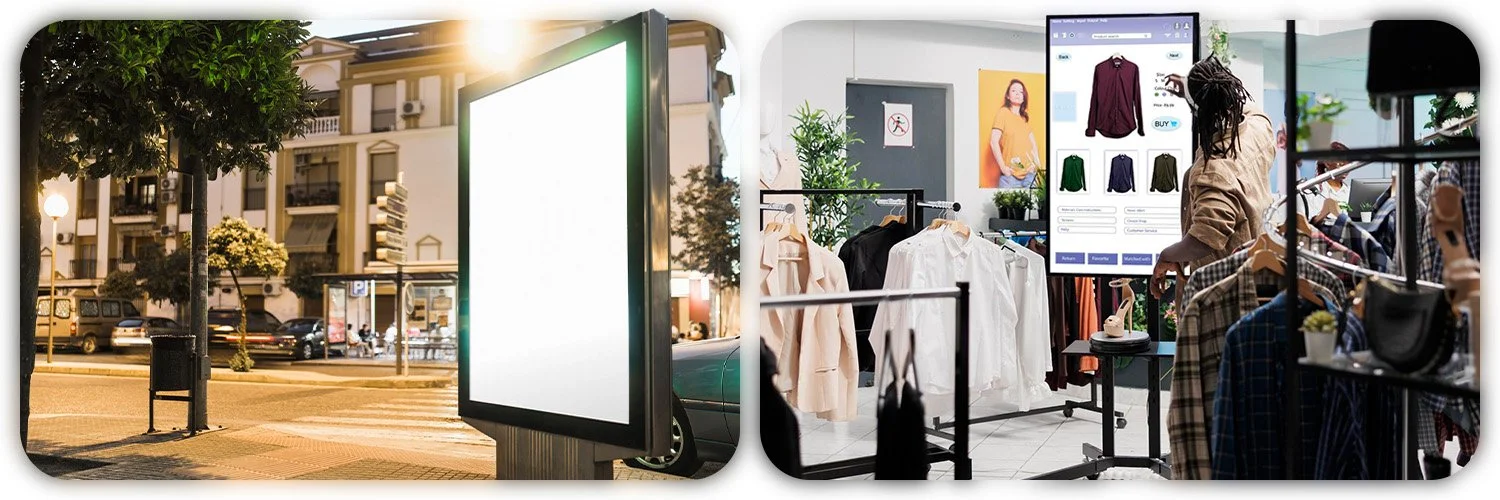
Designed to attract attention from outside the store, digital window displays typically use high-brightness screens and eye-catching content to engage passing shoppers. They are particularly useful for showcasing new product collections, seasonal campaigns and special promotions, helping retailers communicate their message before customers even enter the store.
Video walls
Few digital signage solutions make quite the same visual impact as a video wall. Often found in flagship stores and high-traffic retail locations, these large displays combine multiple screens to create an immersive visual experience. Beyond promoting products, video walls can help retailers tell their brand story, establish a particular atmosphere and create memorable moments throughout the shopping journey.
In-aisle displays
In-aisle displays bring digital communication closer to the products themselves. Typically positioned near a particular product category, these smaller screens can highlight new arrivals, product variations, special promotions or other information relevant to shoppers browsing that section. Their greatest advantage is context. Instead of communicating a general message to everyone, in-aisle displays can present information that is particularly relevant to the shopper's current location.
Shelf-edge displays
Designed to make efficient use of available space, shelf-edge displays are typically slim, elongated screens positioned along product shelves. These displays can highlight individual products, showcase promotions or draw attention to particular brands and product categories. Depending on the technology and integration, they can also support dynamic pricing and provide up-to-date product information directly at the shelf.
Electronic shelf labels
Electronic shelf labels (ESLs) have become an increasingly familiar sight in supermarkets and grocery stores. Replacing traditional paper price tags, these compact digital displays allow retailers to update prices and product information centrally, reducing the need for manual label changes. Many electronic shelf labels use highly energy-efficient display technology, making them suitable for large-scale deployment throughout a store. They may be among the smallest digital displays in retail, but their impact on operational efficiency can be significant.
Smart mirrors and fitting rooms
One of the more interactive applications of digital signage is the smart mirror, often found in fitting rooms and fashion retail environments. These displays combine traditional mirrors with digital functionality, allowing shoppers to access additional information and services without leaving the fitting room. Depending on the solution, shoppers may be able to explore matching products, check available colours or request a different size directly through the interface. By bringing digital assistance into the fitting room, retailers can create a more convenient and personalised shopping experience.
Interactive kiosks
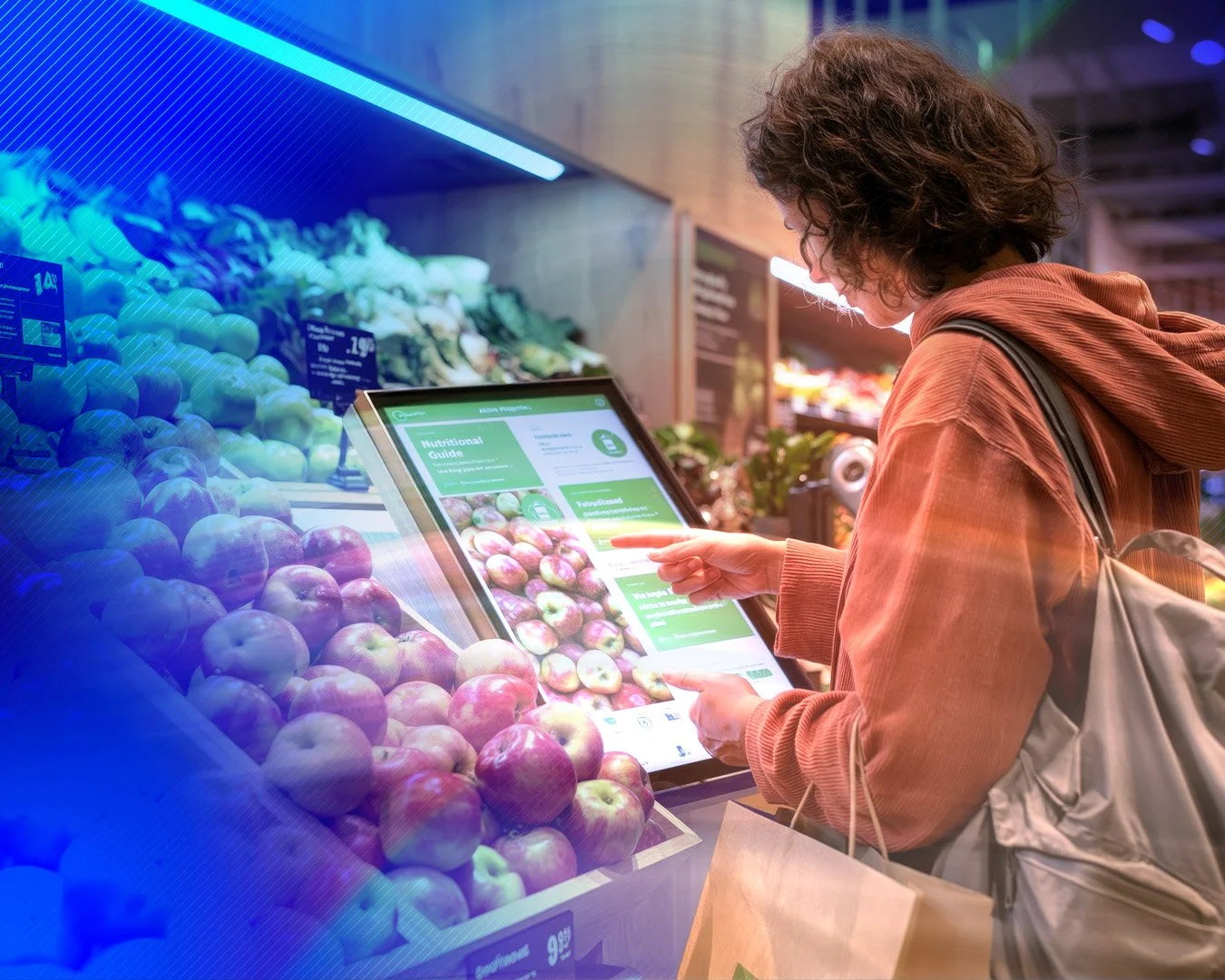
Interactive kiosks allow shoppers to engage directly with digital services throughout the store. These touchscreen solutions come in a wide range of sizes and configurations, supporting everything from product discovery and store navigation to self-checkout, self-scanning services and price verification. Unlike traditional promotional screens, interactive kiosks invite shoppers to take action, making them particularly useful for providing practical assistance. They also help facilitate an omnichannel experience by bridging the gap between physical and digital retail, giving shoppers access to information and services that might otherwise require assistance from store staff.
The right technology for the right moment
With so many digital signage solutions available, retailers have more opportunities than ever to create engaging and efficient store environments. But choosing the right technology isn't simply about selecting the largest screen or the most advanced features. A window display serves a very different purpose from an electronic shelf label. A video wall might create an immersive brand experience, while an interactive kiosk helps shoppers complete a specific task. The real value comes from understanding where each solution fits into the shopping journey and how it can complement other retail technologies.
Successful digital signage isn't about having the most screens. It's about using the right screens, in the right places, for the right reasons.