Is digital signage enough? Why the next step in retail should be personal
Digital signage has transformed how retailers communicate with shoppers – but is showing everyone the same message still the best approach? With self-scanning and personalisation, retailers can make promotions more relevant, timely and useful, creating a shopping journey that feels less like advertising and more like assistance.
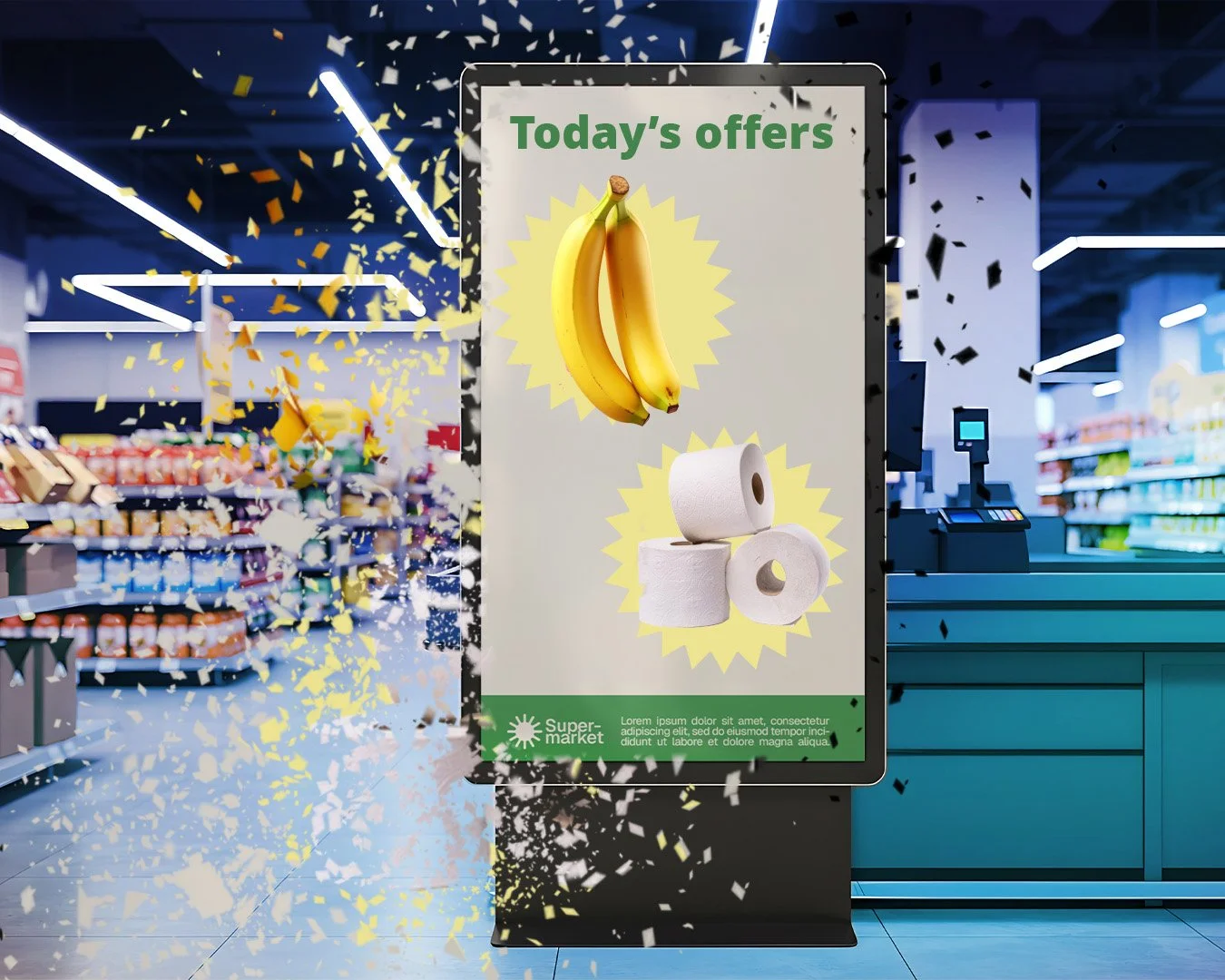
Digital signage, sometimes also known as retail media, has become a familiar part of the retail environment. Screens are everywhere: promoting products, highlighting offers, providing information and, sometimes, simply making the store experience more engaging.
And there is good reason for it. Using digital signage is flexible, eye-catching and much easier to update than traditional printed material. But there is also a limitation: our attention is limited. And there is an increasing number of screens that requires our attention.
A screen can only communicate so much before it becomes part of the background. And if shoppers need to stop and wait for messages to rotate before seeing something relevant to them, are we really making the shopping experience more convenient? Perhaps the next step isn't adding even more screens, instead it's making the communication we already have more relevant for each customer.
From mass promotion to personal relevance
Traditionally, retailers have relied heavily on promotions designed for everyone: the same offer, on the same screen, shown to every shopper who walks past. But shoppers aren't all looking for the same thing:
One shopper might regularly buy vegetarian products.
Another might be more interested in premium brands.
A third may simply want to get through the store as quickly as possible.
Self-scanning thereby creates an interesting opportunity:
“Whether the shopper uses a dedicated handheld scanner or a smartphone app, the device is already part of their shopping journey. Instead of adding another advertising channel competing for attention, retailers can use that existing touchpoint to surface relevant products, recommendations or offers.”, said Fredrik Englund, Managing Director at Datema Retail.
The important distinction is relevance rather than volume. A recommendation based on products already in the basket, previous preferences or information the shopper has chosen to share can feel useful. An endless stream of unrelated promotions quickly feels like advertising, or even worse, surveillance.
Personalisation without becoming invasive
Non-invasive personalisation is where retailers need to find the right balance. The goal shouldn't be to demonstrate how much data you have about a customer, it should be to make shopping easier. A useful recommendation might say: “This product you often buy is on offer today.” Or suggest something complementary to an item the shopper has just scanned.
The technology itself can work quietly in the background. The customer doesn't need to understand the algorithms, data models or the systems behind it - by using a trusted and well-stablished software, the solution will run seamlessly. The shoppers simply experience a shopping journey that feels a little more relevant. And importantly, shoppers should remain in control of how personalised they want that experience to be.
Less advertising, more assistance
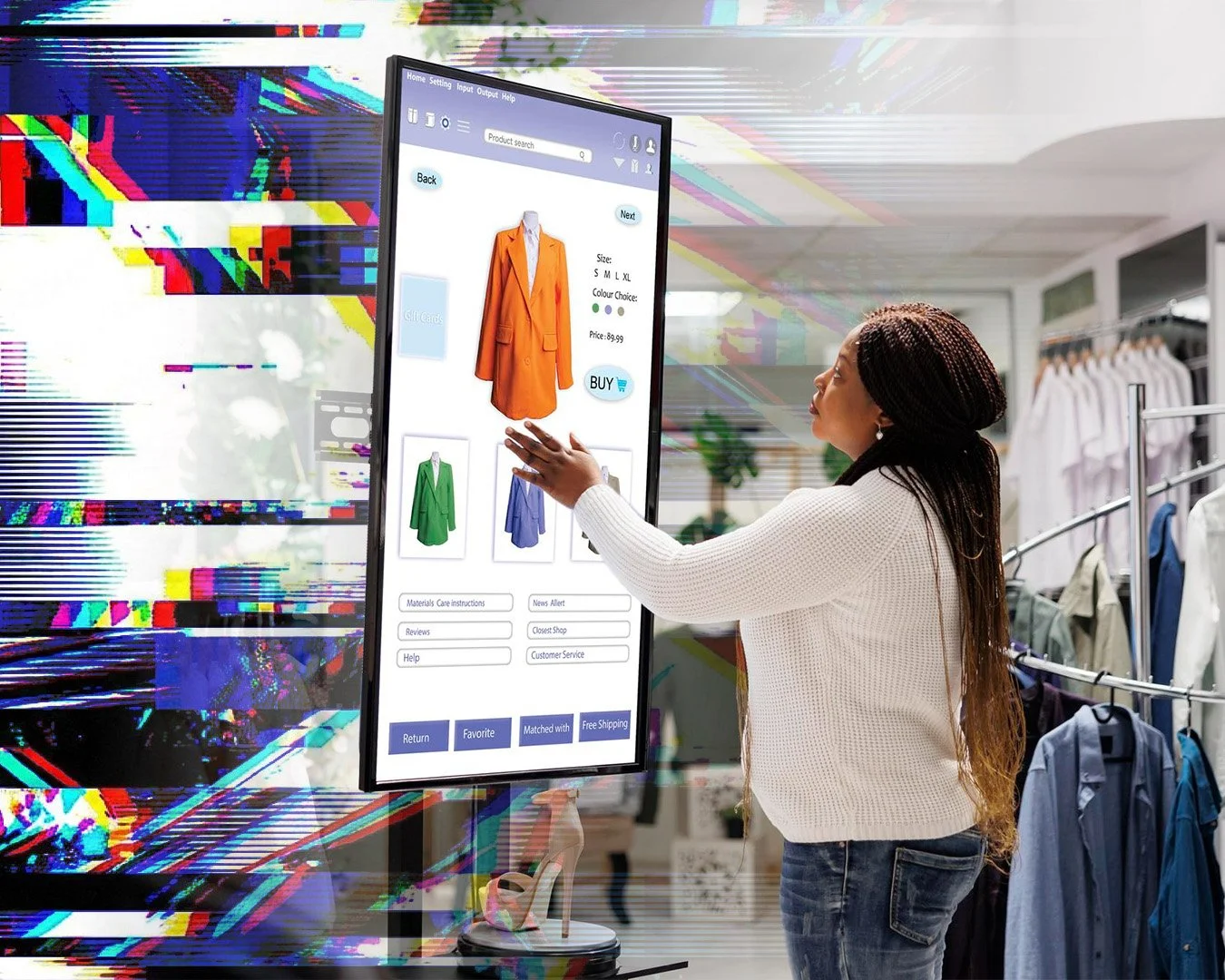
Digital signage isn't going away, nor should it. Screens still have an important role in communicating broad messages, inspiration and information across the store. However, personal devices offer something screens cannot: the possibility of communicating with one shopper rather than every shopper.
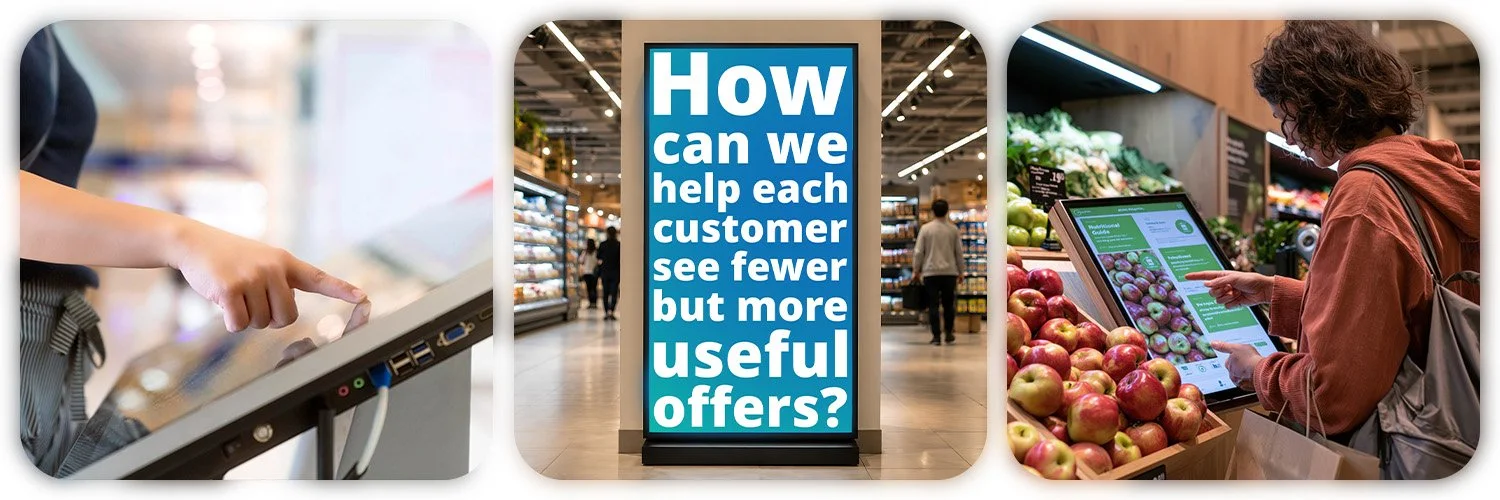
That changes the role of promotion. Instead of asking, “How can we show customers more offers?”, perhaps the better question is: “How can we help each customer see fewer, but more useful, offers?”. That shift – from promotion to assistance – could be what makes personalisation and self-scanning genuinely valuable to the shopping experience.
How can self-scanning take digital signage one step further?
Many of the things we rely on digital signage to communicate can also be delivered through the device already in the shopper’s hand. The difference is that self-scanning can make that information timely, interactive and relevant to the individual shopping journey.
Promotions where they matter
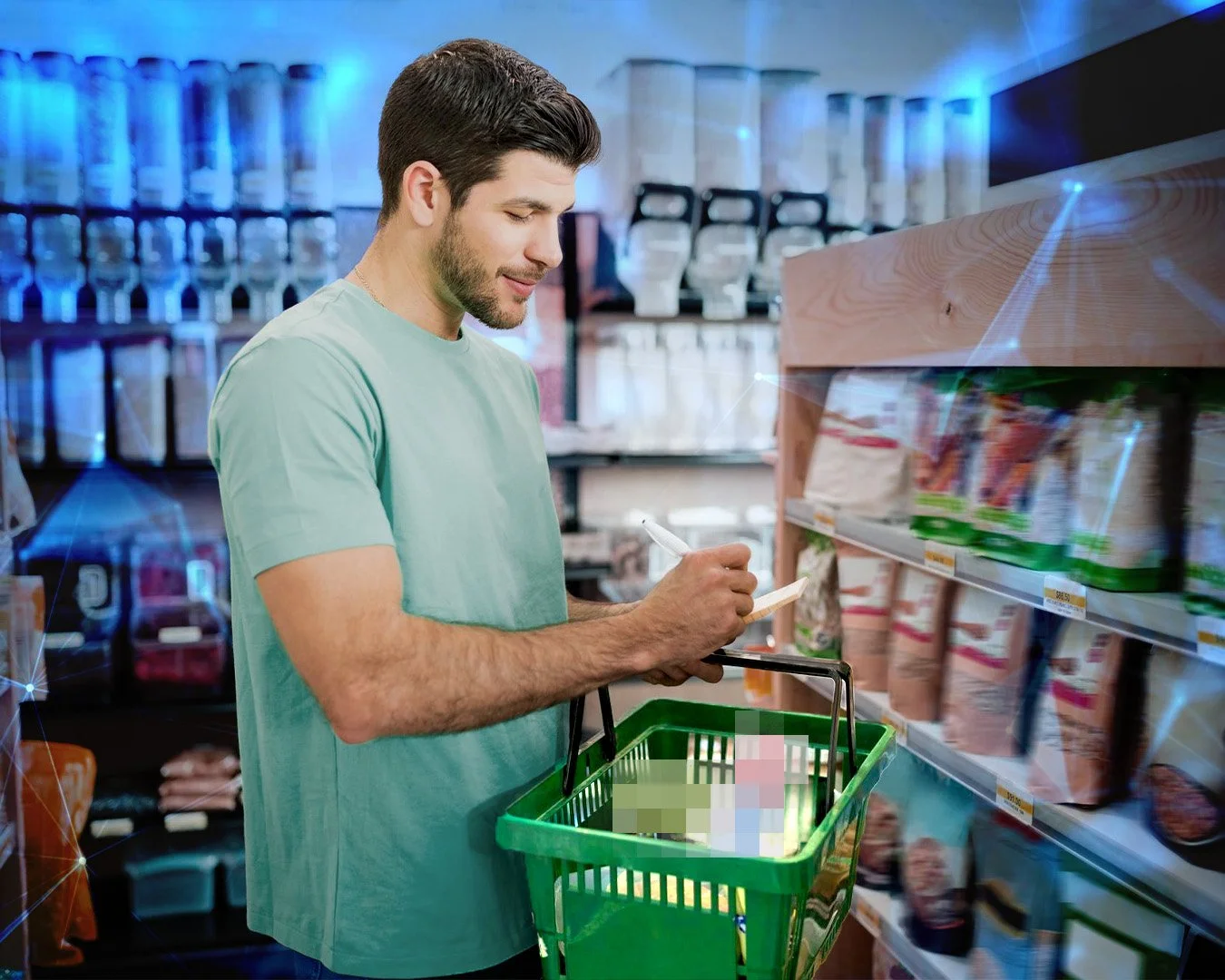
Instead of relying on shoppers noticing a screen, self-scanning can surface location-based promotions as they move through the store. Enter the fruit and vegetable section, for example, and a location-based relevant offer can appear directly on the scanner or smartphone, without requiring the shopper to search for it or wait for a screen to change.
Bundle discounts with instant confirmation
“Buy three, pay for two” and other bundle promotions are common on signage, but they can leave shoppers wondering whether they have picked the right products or whether the discount has actually been applied. With self-scanning, the price deduction can be shown immediately when the qualifying product is scanned. That gives the shopper both instant feedback and greater control over their spending.
More product information, without more signs
A physical or digital sign has limited space. A self-scanning device doesn't have the same limitation. After scanning a product, shoppers could access nutritional details, allergens, ingredients, origin, sustainability information or other useful product information, without filling the store with additional messaging. Also, as the new GS1 Link initiative is to be launched, this type of information will be even easier to access in a self-scanning app.
From broadcasting to assisting
The real advantage isn't simply moving promotions from a large screen to a smaller one. It is being able to present information at the moment it becomes useful.
Digital signage broadcasts. Self-scanning can respond.
And that creates an opportunity to make promotions feel less like advertising and more like a helpful part of the shopping journey.